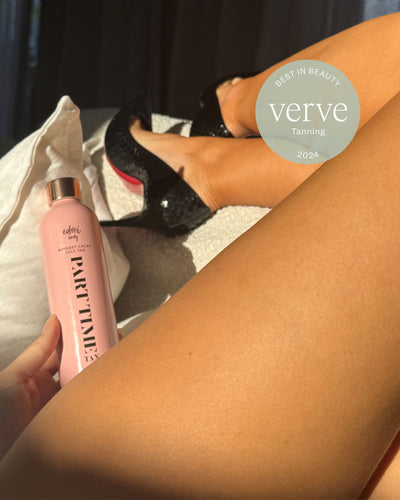


The ed&i Pink Print of Sustainability
The beauty industry pumps out an estimated 1.3 billion pieces of packaging a year. Most of it is plastic.
So the obvious next thought is easy: just use recycled plastic, problem solved.
If only it were that simple.
Only around 9% of plastic waste worldwide actually gets recycled. The rest? Landfilled. Incinerated. Or leaking straight into the environment.
Here's the part brands don't love to talk about. Even when a bottle says "made from recycled plastic," it's rarely 100%. Plastic degrades a little every time it's reprocessed, so virgin plastic gets blended back in just to keep the bottle sturdy enough to survive your shower shelf. Meaning that "recycled" bottle in your hand still holds brand new plastic.
Plastic is light. It survives a gym bag drop. And for things like pumps, it's genuinely the best tool for the job. We're not going to pretend otherwise just to sound good.
But some truths are too big to look past. So wherever we possibly can, we reach for glass and aluminium instead.
Glass doesn't react with what's inside it, so your formula stays exactly as potent as the day we made it. And it can be melted down and recycled again and again without losing quality. Ever.
Aluminium is light, tough, and one of the few materials that can be recycled over and over without degrading. It's some of the most valuable material in the entire recycling stream.
We still use plastic where safety or function genuinely demands it. No shame in that.
But every single product starts with us asking the same question: can we use less plastic here?
My personal belief is that, in this day and age, sustainability shouldn’t be a marketing strategy. It should be a responsibility.
Beauty brands create an enormous amount of waste, and I don’t think we should get a gold star for simply trying to reduce our impact. We should be expected to.
And I think we need to start questioning some of the things being marketed to us as “sustainable.” A refill, for example, doesn’t automatically make something sustainable, particularly if we’re still producing more plastic to refill more plastic. That's called greenwashing.
Plastic may be cheaper. It may be lighter. It may make better commercial sense for a brand.
But at what cost?
And this isn’t me saying you need to buy from ed&i. You don’t.
It’s me asking you, as a consumer, to look beyond the sustainability claims on the front of the packaging and ask harder questions about the brands you support.
Because if a small, independent brand can question its packaging, invest in glass and aluminium where possible, and accept the impact that can have on margins, then surely the billion-dollar beauty conglomerates producing products at an enormous scale can investigate better alternatives too.
Can they make change? Can they use more glass, aluminium, genuinely circular systems or other alternatives to virgin plastic?
Yes.
And I think it’s time we stopped treating that as something extraordinary and started expecting it.
xo
Ed